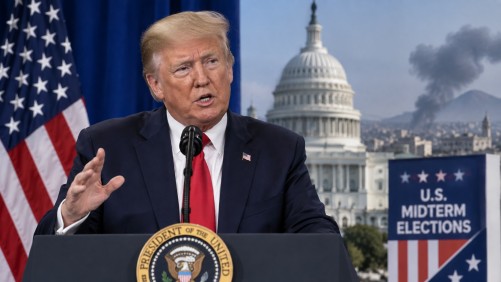
In a recent statement, U.S. President Donald Trump expressed his belief that the ongoing conflict between the United States and Iran could conclude following the U.S. midterm elections in November. Trump, speaking to the press in Dublin, suggested that Iran is attempting to extend the conflict to sway the outcome of the U.S. elections. He optimistically predicted that the resolution of the conflict would lead to a significant decrease in oil prices, which have been affected by the tensions.
In contrast, Iranian President Masoud Pezeshkian, attending the BRICS Summit in New Delhi, emphasized that Iran prioritizes peace and does not desire a protracted conflict. Pezeshkian asserted that the responsibility for regional security should rest with the countries in the region, rather than relying on U.S. intervention, highlighting Iran’s stance on maintaining stability through regional cooperation.
The conflict has had a notable impact on energy markets, particularly due to the strategic significance of the Strait of Hormuz. The ongoing tensions have contributed to a sharp increase in oil prices, with crude surpassing $100 a barrel, reflecting the market’s response to the uncertainty surrounding the conflict.
Despite efforts to achieve a settlement, progress has been limited, and fighting persists, albeit at a reduced intensity. This continued uncertainty poses significant concerns for the future of both regional security and global energy supplies, as stakeholders closely monitor developments in the hope of finding a peaceful resolution.