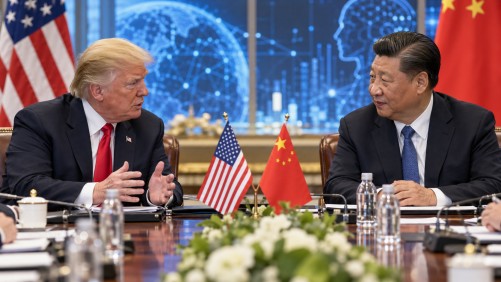
US President Donald Trump and Chinese President Xi Jinping tackled the escalating Middle East conflict during their summit on September 25. The discussions come as Iran proposes a seven-day plan aimed at reopening the strategic Strait of Hormuz and alleviating regional tensions.
The proposal from Iran calls for an immediate end to hostilities, the lifting of the US blockade on Iranian ports, the release of frozen Iranian funds, and the removal of oil sanctions. Iranian Foreign Minister Abbas Araqchi emphasized that if the United States accepts the plan, normal maritime traffic could resume within seven days. Despite this, the United States has yet to publicly accept the proposal, though it acknowledged that discussions through mediators are progressing, particularly on nuclear issues.
During the summit, Xi urged the United States and Iran to revert to the June framework that resulted in a temporary ceasefire, suggesting a return to negotiations for a broader settlement. Iran has expressed openness to this idea but remains firm on not making concessions regarding its nuclear program, including uranium enrichment.
President Trump also expressed concerns to Xi about potential Chinese support for Iran, either directly or indirectly. US Ambassador to China David Perdue reported that China reassured the United States it was not aiding Iran in any capacity.
The Middle East conflict has significantly disrupted energy flows through the Strait of Hormuz, elevating tensions across the Gulf, Yemen, and Lebanon. In response to the widening security concerns, Saudi Arabia, Pakistan, and Turkey are exploring closer military and intelligence coordination.