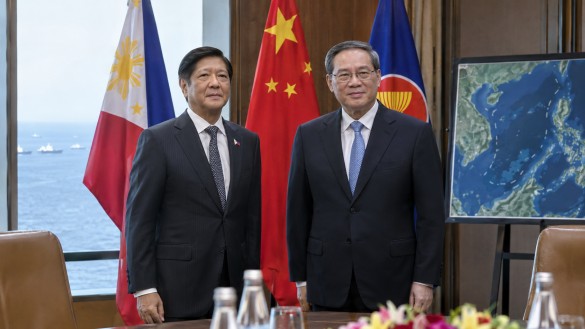
Philippine President Ferdinand Marcos Jr. and Chinese Premier Li Qiang have committed to enhancing cooperation between the Association of Southeast Asian Nations (ASEAN) and China. This pledge comes amid ongoing tensions in the South China Sea, where negotiations for a Code of Conduct remain unresolved. The leaders made their commitment during the 29th ASEAN-China Summit in Manila on November 16, celebrating 35 years of dialogue relations and the fifth anniversary of their Comprehensive Strategic Partnership.
President Marcos underscored the necessity of adhering to international law, ensuring regional stability, and peacefully resolving disputes. He noted progress in talks regarding the South China Sea’s proposed Code of Conduct, which aims to mitigate maritime incidents and ease tensions. Despite these advances, the agreement is unlikely to be finalized before the Philippines passes the ASEAN chairmanship to Singapore in 2027, as disagreements persist over its geographical scope, legal status, and key definitions.
Premier Li highlighted the economic collaboration between China and ASEAN, revealing that their trade exceeded $1 trillion last year, with two-way investment surpassing $500 billion. This economic interdependence underscores the growing ties between the regions. The summit’s discussions spanned various topics, including trade, investment, supply chains, artificial intelligence, technology, healthcare, maritime security, and joint efforts against transnational crime.
Both parties also expressed their support for expanding economic opportunities and fortifying regional partnerships. However, the incomplete negotiations over the South China Sea Code of Conduct remain a significant hurdle. Officials stated that about 80% of the draft’s paragraphs have provisional agreement, but key issues continue to delay a final resolution.
The proposed agreement is designed to establish guidelines for responsible behavior in the contested waters, though it will not settle territorial claims. The ongoing discussions reflect the complex dynamics of regional diplomacy, as ASEAN and China seek to balance economic cooperation with geopolitical challenges.