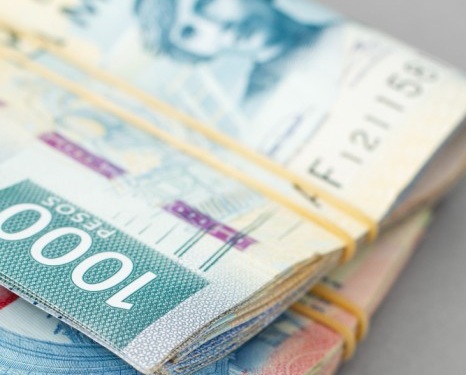
The Philippine peso reached a new record low on Monday, while the stock market experienced a downturn as investors grew increasingly wary of both global and domestic uncertainties. The peso depreciated by 2.9 centavos, closing at P61.75 to the dollar, surpassing the previous low of P61.721 set on Friday. Concurrently, the Philippine Stock Market index (PSEi) fell by 35.25 points, or 0.59 percent, ending the day at 5,941.52.
Market analysts noted that the peso’s movement was driven more by market sentiment than by fundamentals. A trader highlighted that the dollar’s strength combined with heightened demand for safe assets, increased oil-related dollar demand, and domestic uncertainty were influencing the peso’s decline. The trader emphasized that at current levels, positioning and momentum are significant factors, particularly in a market with thin liquidity, potentially amplifying currency fluctuations.
The peso’s near-term outlook remains skewed towards further weakening, with P62 to the dollar now a psychological possibility, though sharp fluctuations in both directions could occur. The peso joined the Indonesian rupiah and Indian rupee in hitting record lows as escalating tensions in the Gulf region propelled oil prices and global yields upward, strengthening the dollar and impacting oil-importing nations. The rupiah, recognized as one of the region’s weakest currencies, fell by 1.16 percent to 17,665 per dollar, marking its largest intraday percentage loss since April 2025. The Indian rupee also hit a historic low of 96.303 per dollar, continuing its downward trend initiated by rising oil prices following the Iran conflict in late February.
Analysts from MUFG and Philstocks Financial Inc. noted that Asian emerging market currencies, such as the rupee and peso, are under pressure from both the robust dollar and rising oil prices. Additionally, yield-sensitive currencies like the rupiah are facing domestic challenges. Concerns over the Middle East conflict have intensified, particularly following recent threats toward Iran, prompting a defensive stance among investors. Luis Limlingan, head of sales at Regina Capital Development Corp., remarked that buying interest remains subdued as investors seek clearer market catalysts. The rising global crude oil prices and the peso’s continued weakness contribute to the cautious market sentiment.
Trading activity was notably sluggish, with net value turnover dropping to P3.85 billion, significantly below the year-to-date average, indicating persistent investor hesitation. Foreign funds also remained cautious, with net outflows amounting to P225.76 million. Among sectors, only property stocks concluded the day positively, edging up by 0.19 percent, while mining and oil stocks led the decline with a 3.4-percent drop. Overall market breadth was negative, with 117 stocks declining compared to 65 advancers, while 68 issues remained unchanged.