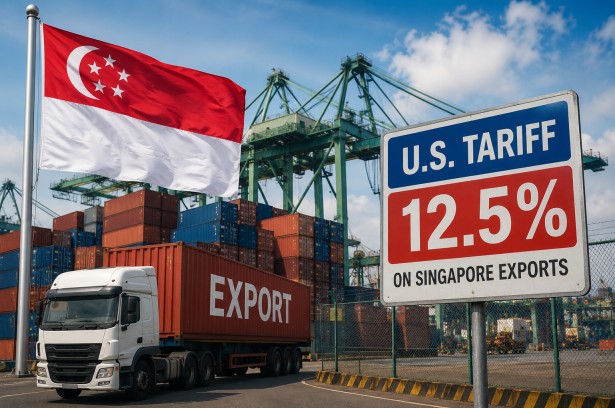
The United States has introduced a new tariff of 12.5% on around one-third of Singapore’s domestic exports, citing concerns related to the enforcement of forced labor regulations. This move is part of a broader trade policy affecting numerous global economies. Singapore has firmly denied these allegations, emphasizing its strong legal framework against forced labor practices. The country’s Ministry of Trade and Industry has expressed its commitment to continue engaging with U.S. trade officials to gain a clearer understanding of the implementation process for the new tariff.
The tariff imposition notably excludes several of Singapore’s significant export sectors, including pharmaceuticals, semiconductors, certain electronics, aerospace products, and energy products. Additionally, goods that are already subject to specific U.S. sector tariffs remain unaffected by the new measure. Despite these exemptions, business groups have expressed concern over the potential increase in uncertainty for manufacturers and exporters in Singapore.
The tariff decision comes against the backdrop of an ongoing U.S. investigation that could lead to further trade measures. This has prompted industry leaders to advise companies to diversify their export markets and enhance the resilience of their supply chains. The situation underscores the intricate dynamics of international trade relations and the challenges businesses face amid shifting economic policies.
As the discussions between Singapore and the United States continue, the focus remains on resolving the trade policy differences while ensuring that legitimate concerns are addressed. Both nations are working to maintain a constructive dialogue, aiming to mitigate any adverse impacts on their economic ties. The developments highlight the importance of cooperation and understanding in navigating the complexities of global trade.