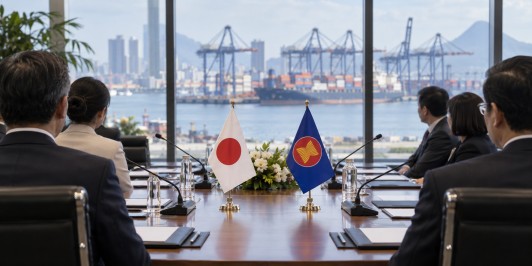
The latest move by Japan and the Association of Southeast Asian Nations (ASEAN) to explore an expansion of their economic partnership agreement is set to bolster supply-chain resilience, enhance energy security, and integrate artificial intelligence across the region. This strategic decision, which underscores a commitment to addressing global supply chain vulnerabilities and the growing significance of AI, was made during a gathering of economic ministers in Manila on September 20.
With geopolitical tensions and global trade uncertainties heightening risks, both Japan and ASEAN are keen to update their existing agreement, originally effective since 2008, to reflect current economic challenges. The partnership has been instrumental in facilitating trade in services and investment, contributing to a substantial $245.4 billion in two-way merchandise trade by 2025, while Japanese investment in ASEAN reached $9.5 billion.
Energy security remains a focal point, as ministers emphasized the need for stable energy supplies amid disruptions to key routes in the Middle East. Japan’s pledge to support the strengthening of oil stockpiles in ASEAN nations is a pivotal step toward enhancing regional security and ensuring consistent energy flow.
As the discussions progress, the emphasis on closer economic cooperation is expected to foster a more resilient economic environment within the region. The integration of artificial intelligence into the economic framework highlights the forward-thinking approach of both Japan and ASEAN, as they navigate an increasingly digital and interconnected global economy.
The outcome of this strategic collaboration could set a precedent for other regions grappling with similar challenges, as Japan and ASEAN aim to adapt and thrive in a rapidly evolving economic landscape.