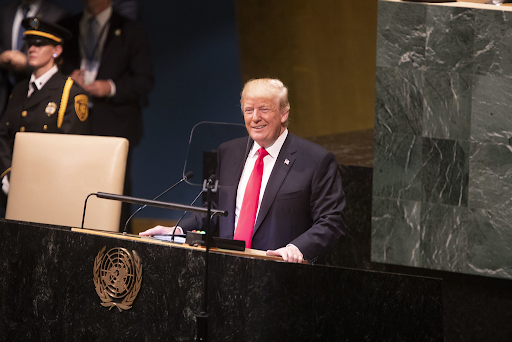
In a significant expansion of his narrative on the Ukraine war, US President Donald Trump has now added Indian Prime Minister Narendra Modi’s government to his list of parties to blame for the ongoing conflict. His UN General Assembly speech accused India of being a “primary funder” of the war, shifting some responsibility away from the primary combatants, Russia and Ukraine.
Having grown frustrated with his own stalled mediation efforts between Vladimir Putin and Volodymyr Zelensky, whom he has accused of “stubbornness,” Trump has identified a new culprit: the money. By naming India and China as the key financiers through their oil purchases, he creates a fresh angle of attack and a new target for pressure.
This shift in rhetoric allows the Trump administration to reframe the problem. Instead of a complex military and diplomatic stalemate, it becomes a simpler issue of cutting off the financial pipeline. This logic leads directly to his proposed solution: “a very strong round of powerful tariffs” on countries like India, which he believes would “stop the bloodshed… very quickly.”
This new narrative conveniently overlooks India’s position that it is acting in its own economic interest, a right of any sovereign nation. It also ignores the West’s own long history of energy dependence on Russia. Instead, it singles out new, major buyers and holds them responsible for the war’s continuation.
The speech, which also included Trump’s disputed claim of stopping an India-Pakistan war, puts the Modi government in an extremely uncomfortable position. It is now being publicly implicated by a key ally in a major European war, a development that seriously complicates India’s foreign policy and its relationship with the United States.
52