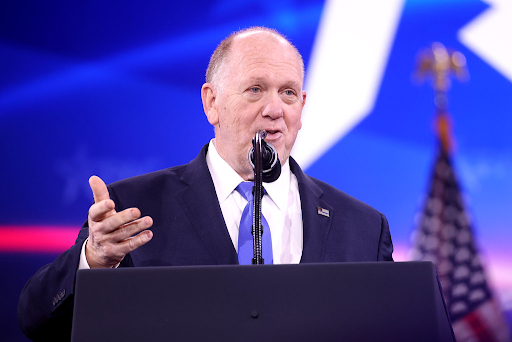
In a startling revelation that exposes the callousness of current immigration enforcement, Tom Homan, the United States border czar, has publicly acknowledged his complete lack of knowledge regarding eight deportees recently sent to South Sudan. His admission that they’re free as far as we’re concerned reveals a troubling disconnect between policy implementation and humanitarian responsibility.
The eight individuals, originating from Mexico, Cuba, Vietnam, Laos, and Myanmar, represent a diverse group caught in the crosshairs of the Trump administration’s renewed third-country deportation initiative. Their forced relocation to South Sudan, a nation grappling with post-civil war reconstruction and ongoing instability, demonstrates the extreme measures being employed in current immigration enforcement strategies.
The deportation process itself reveals the complex legal and logistical challenges involved in such operations. Initially delayed by court intervention, the men were held at a military base in Djibouti before being transferred to their final destination after the Supreme Court upheld the administration’s policy. This multi-stage process raise’s questions about the resources and international coordination required for such deportations.
Perhaps most concerning is the fact that seven of the eight deportees have no apparent connection to South Sudan, effectively making them stateless individuals in a foreign land. While South Sudanese officials have confirmed the men are in custody in Juba undergoing welfare assessments, the long-term implications of this policy for both the deportees and the receiving nation remain unclear and potentially destabilizing.
61