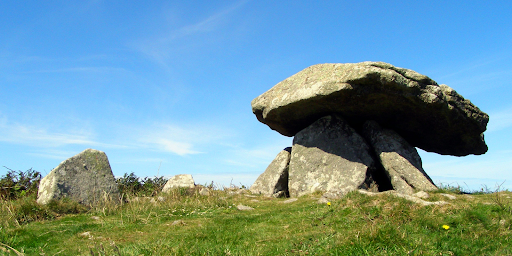
Geology and astronomy converge along Cornwall’s Land’s End peninsula in ways that fundamentally shaped prehistoric monument construction. A granite ridge extends southwest along the landscape, naturally aligned with the direction of winter solstice sunset. This geological feature provided both practical and symbolic foundation for creating an integrated ceremonial landscape oriented toward the year’s critical turning point.
Archaeoastronomer Carolyn Kennett describes this granite backbone as the key to understanding the peninsula’s prehistoric monuments. Neolithic communities recognized the ridge’s astronomical significance—that it pointed directly toward where the sun sets on the shortest day. Rather than viewing this as mere coincidence, they understood it as meaningful correspondence between earth and sky that deserved commemoration and enhancement.
Multiple monuments positioned along or near this granite ridge demonstrate how communities acted on this understanding. Chûn Quoit sits where observers see the winter solstice sun setting over Carn Kenidjack. Tregeseal circle frames views of the Isles of Scilly on the southwestern horizon. These deliberate placements created observation points where people could gather to witness solar phenomena during moments of astronomical significance.
The granite itself held material advantages for monument construction. Its durability ensured structures would persist through centuries, maintaining their alignments for future generations. The effort required to quarry, transport, and position massive granite stones demonstrated communities’ commitment to creating permanent markers of astronomical knowledge and cosmological beliefs.
Contemporary understanding of this geological foundation enhances appreciation for prehistoric achievements. The same granite ridge that guided ancient builders remains visible today, creating continuity between past and present. Modern observers following the ridge’s alignment toward winter solstice sunset can understand how Neolithic peoples conceptualized their landscape as an integrated whole where geological features, astronomical patterns, and human monuments worked together. This holistic vision, maintained through festivals like Montol and ongoing archaeological research, demonstrates how Cornwall’s prehistoric heritage continues offering insights into sophisticated worldviews that refused artificial separations between nature, cosmos, and human meaning-making.
20